
Back to home

Library Profiles

The Library Digital Inclusion Project 2026 supports library teams across Africa as they design and implement digital inclusion projects shaped by the realities of their own communities. Meet the libraries and the projects they are bringing to life.

6

Library Teams

6

Countries

2

Project Tracks

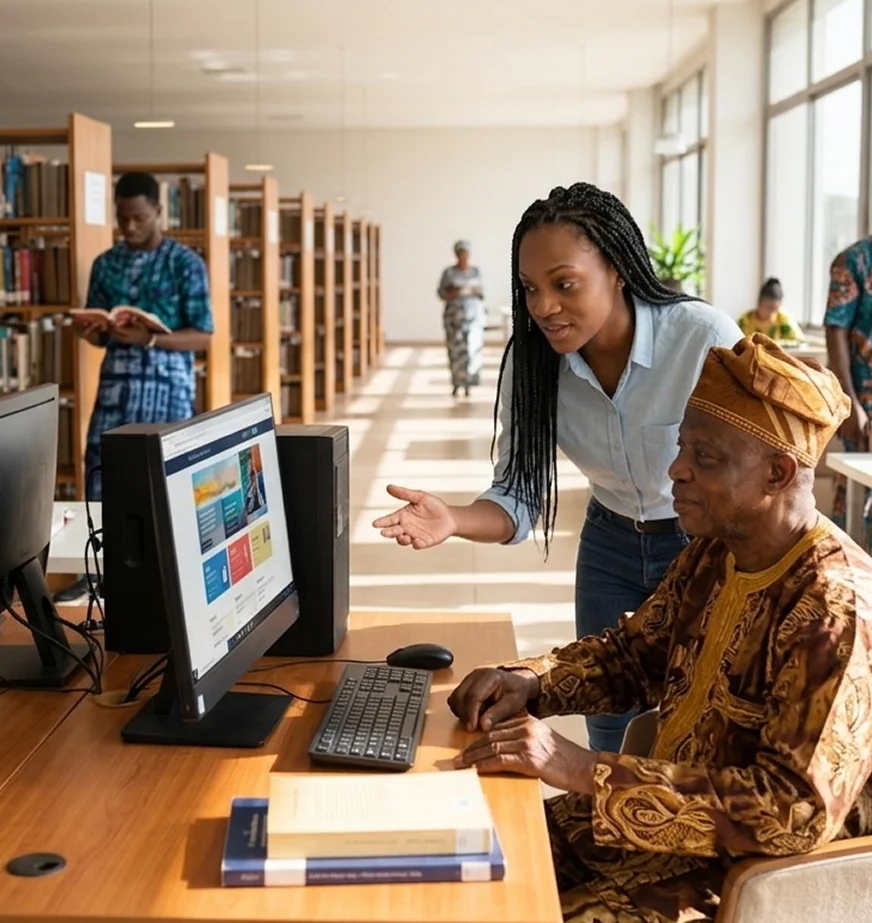
A librarian supporting a community member at a library computer
Filter by track
STEAM

Libraries Without Walls

Location
Greater Accra, Ghana
Library Type
Community Library
Community
Rural

Project Title

MINDSPARK: Libraries Without Walls Coding and Digital Inclusion Initiative

Project Brief

Mindspark is a six-month, community-based digital inclusion project designed to provide foundational digital literacy, coding, computational thinking and practical STEM learning opportunities to girls and children with disabilities in the underserved and last-mile communities in the Shai Osudoku District. A total of 150 learners, including girls and children living with disabilities between the ages of 9 and 16, will develop computational thinking and problem-solving skills and prepare for future employment in an increasingly digital economy. The project will also produce the MINDSPARK Coding Toolkit—a community-designed and reusable collection of age-appropriate coding and digital learning activities that can be used by learners, teachers, volunteers and the library beyond the project period.

Target Group

Children Girls Persons with disabilities
Digital Literacy

Sierra Leone Library Board

Location
Western, Sierra Leone
Library Type
Public Library
Community
Urban
Connect
Sierra Leone Library Board

Project Title

Digital Literacy for Out-of-School Youths, School Going Pupils and School Leavers

Project Brief

This project is a workshop that will empower at least 120 people, comprising out-of-school youth, students and school leavers, with digital skills, entrepreneurship resources and access to digital services that will support their livelihoods and create employment opportunities. Participants will learn to use the computer, type, use online learning platforms, and access career support provided at the library.

Target Group

Unemployed youth Women and girls Out-of-school youth Out-of-school children
Digital Literacy

Start a Library Trust School

Location
Nairobi, Kenya
Library Type
School Library
Community
Sub-urban

Project Title

Storybook Quest

Project Brief

The Storybook Quest project will support digital creation by creating opportunities for African children in informal settlements and rural communities to become authors and create and share their own original stories. A total of 84 children from Muturu Primary School in Kenya will be empowered through creative writing and guided to use existing digital devices to write, edit and illustrate their own original stories. 21 selected stories will be published in printed anthologies, with young authors earning royalties for their work. This will give learners a real and tangible experience of authorship and digital creation.

Target Group

Rural students
STEAM

Kufanga Knowledge Hub

Location
North Western, Zambia
Library Type
Community Library
Community
Sub-urban
Connect
Facebook

Project Title

Kufanga Digital Access Initiative

Project Brief

The project is designed to respond to poor primary and secondary school results recorded in rural settlements in the North-Western Province of Zambia. It will support access to digital learning resources to improve the educational outcomes of young people between the ages of 7 and 15. The project will empower 20 young people with access to offline digital learning resources and digital tools to learn skills such as typing, content creation, arts, coding and storytelling, as well as problem-solving, through the Kufanga Knowledge Hub, which is a children's library. The project will provide knowledge and learning opportunities to the young people in the Magrade area, a rural community in Solwezi District, in North-Western Zambia.

Target Group

Children Out-of-school children
Digital Literacy

Linda Dweba Public Library

Location
Eastern Cape, South Africa
Library Type
Public Library
Community
Rural

Project Title

Digital Pathways Project

Project Brief

This project is an after-school programme for Grade 9 students from Ngqeleni Village JSS, designed to respond to the urgent need to bridge the digital divide in Ngqeleni, Eastern Cape, South Africa. In partnership with the local public school, 30 students will be engaged over the next school term. They will be taught basic computer appreciation, typing and online research, combined with book reading activities, through an after-school programme at the Linda Dweba Public Library. The project aims to increase the digital exposure of children from low-income households.

Target Group

Rural children
Digital Literacy

Kano State Library Board, Murtala Muhammed Library

Location
Kano, Nigeria
Library Type
Public Library
Community
Urban
Connect
Facebook

Project Title

Libraries as Community Hubs for Digital Inclusion and Lifelong Learning

Theme: Digital Citizenship and Online Safety for Students and Community Members

Project Brief

This project is designed to provide digital learning opportunities to 50 underserved students, 200 out-of-school young people, and 200 community members. The 50 underserved students, who have limited or no access to computers and digital literacy skills, will receive digital learning and computer-based test preparation, including mock tests, to prepare them for the compulsory Unified Tertiary Matriculation Examination (UTME). This will increase their chances of gaining admission into tertiary institutions. The 200 out-of-school young people, including school dropouts and those who have never attended school, will receive basic digital skills and practical tools to support their employment and participation in the digital world. A community outreach campaign will engage 200 community members through digital literacy and online safety activities. The campaign will provide practical knowledge on digital citizenship, online safety, privacy protection, and how to identify and avoid common online risks.

Target Group

Underserved youth and students Women and girls Older persons Out-of-school youths